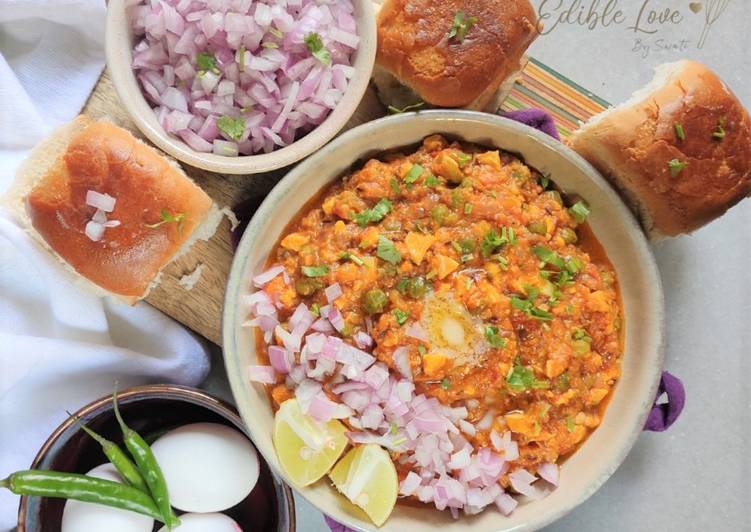
Hey everyone, I hope you’re having an incredible day today. Today, we’re going to prepare a distinctive dish, boiled egg pav bhaji. It is one of my favorites. This time, I am going to make it a little bit unique. This will be really delicious.
Boiled egg Pav bhaji is one of the most favored of current trending meals on earth. It is appreciated by millions every day. It is easy, it’s fast, it tastes yummy. They are nice and they look fantastic. Boiled egg Pav bhaji is something which I have loved my entire life.
Foodworks Presents, Egg Pav Bhaji, a popular Indian street food loved by all. This Egg Pav Bhaji is the improvised version of Pav Bhaji with Eggs and Egg. How to make Egg Pav Bhaji.
To begin with this particular recipe, we have to first prepare a few components. You can have boiled egg pav bhaji using 25 ingredients and 5 steps. Here is how you can achieve that.
The ingredients needed to make Boiled egg Pav bhaji:
- Make ready bhaji
- Take Boiling together-
- Prepare small potato diced in big pieces
- Take green peas
- Get carrot diced roughly
- Take florets of cauliflower
- Make ready eggs boiled, peeled and mashed
- Take oil
- Make ready jeera
- Prepare hing
- Prepare large onion, finely chopped
- Prepare small tomatoes, finely chopped
- Make ready green chilies, finely chopped
- Take pav bhaji masala
- Make ready dhaniya powder
- Take salt (or to taste)
- Take ketchup (optional)
- Take butter or more as per taste
- Get chopped green coriander
- Take Pav buns
- Prepare pav buns
- Get butter to pan fry
- Get Ingredients
- Take onion chopped
- Take lemon cut in wedges
Pav Bhaji Recipe with video and step by step photos. Pav Bhaji is a popular street food from mumbai consisting of spiced smooth mashed mix vegetables, served with lightly toasted buttered bread. This Mumbai style pav bhaji is super delicious to taste and similar to the pav bhaji one gets in Mumbai. These buttered buns topped with a spiced vegetable gravy, finely chopped red onions, and lime juice (think of it as a So, when I asked Sonia for the recipe for my cookbook years later, I was surprised to find out that the whole thing came down to boiling a bunch of vegetables.
Instructions to make Boiled egg Pav bhaji:
- For the bhaji- - In a pressure cooker add the potatoes, carrot, peas and cauliflower. Add ½ glass of water and cook for 3 whistles. Mash the vegetables. - Boil the eggs, peel and mash them.
- In a kadai, add 1 tbsp of oil add jeera and hing, when jeera turns golden add the onions and sauté till light golden. Now add the tomatoes and green chilies, cook till the masala releases the oil.
- Add the pav bhaji masala, dhaniya powder and salt. Add the ketchup; Mix well. It is now time to add the mashed vegetables and eggs. Mix nicely. If you feel it is too thick add some water to get a semi gravy consistency. Add the chopped green coriander.
- For the Pav- - Cut the pavs horizontally in two, heat some butter on a tawa and put the pavs on the tawa cut side down. Roast till golden brown. Flip and roast again.
- To serve- - Serve the pav bhaji in a platter top with butter, sprinkle some chopped onions and lemon juice. - Serve hot with crispy roasted buns.
Pav Bhaji - a spicy curry of mixed vegetables (bhaji) cooked in a special blend of spices and served with soft bread pav shallow fried in butter. Mash the boiled vegetables gently with potato masher or using the backside of a large spoon until little chunky texture. You can mash cooked veggies into a. Gradually add flour, and stir until thick. Pav Bhaji is a wonderful one-pot meal.
So that is going to wrap it up with this exceptional food boiled egg pav bhaji recipe. Thanks so much for your time. I’m sure you can make this at home. There’s gonna be interesting food in home recipes coming up. Remember to bookmark this page in your browser, and share it to your family, friends and colleague. Thanks again for reading. Go on get cooking!